Mysteries of Tigers

Santosh Jha
| 16-01-2026


As awe-inspiring wild animals, tigers have long captivated people's attention and curiosity. Not only are they known for their majestic appearance and immense strength, but they also possess many little-known facts.
Here are five facts about tigers that reveal the mysterious nature of the "King of the Forest":
1. Unique Stripes
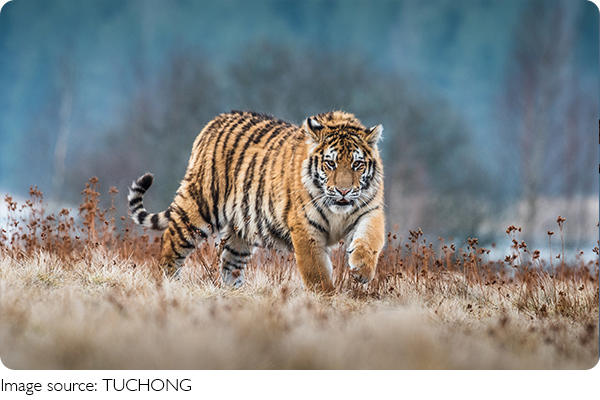
Tigers' stripes are not only their most recognizable feature but also serve as their identity. Scientific research has shown that each tiger's stripes are unique, much like human fingerprints.
The pattern, shape, and number of stripes vary between individuals, enabling scientists to identify and track specific tigers by their unique stripe patterns. These unique patterns are crucial for their camouflage in the wild and are of significant value in tiger research and conservation.
Known for its graceful beauty, the Dalmatian Pelican is a symbol of elegance in nature. Explore its fascinating lifestyle and habitat!
Discover why lions thrive in social groups, leveraging teamwork and communication for survival in the wild!
The least weasel: a tiny predator with a big role in nature's balance and beauty!
Discover the incredible world of elephants, from their massive size to their emotional depth, intelligence, and vital ecosystem roles!
This Question Comes To Mind! Why Is the Speed of the Cheetah So Fast?
Clownfish: The Colorful Superstars of the Sea!
2. Hunting Habits and Drinking Water Behavior
Tigers are quintessential carnivores, renowned for their formidable hunting skills. They primarily prey on large mammals such as deer. Unlike lions, which hunt in groups, tigers hunt alone and rely on stealth to ambush their prey.
Although tigers can go for long periods without water, they typically drink after hunting, especially in hot weather. They are also skilled swimmers and often hunt waterfowl and fish, which helps them thrive in a variety of habitats.
3. Reproductive Habits and Cubs' Development
Tigers have unique reproductive behaviours. Female tigers breed every two to three years, usually giving birth to two to four cubs per litter. Cubs are born almost entirely dependent on their mother, with closed eyes and weighing only 1-1.5 kilograms.
The mother tiger provides comprehensive care during the nurturing period, including feeding and protection. Cubs begin to eat solid food around six months of age but continue to depend on their mother until about 18 months old when they start to live independently.
4. Social Behavior
Although tigers are generally considered solitary animals, they sometimes display social behaviour. For instance, in areas with abundant food, tigers may share their prey, particularly a mother tiger with her cubs.
Additionally, research has shown that in some regions, tigers communicate with each other through scent marking and vocalizations. This method of communication helps them avoid conflicts and mark their territorial boundaries.
5. Conservation Status and Challenges
Tigers face severe challenges to their survival. Due to habitat loss, poaching, and illegal trade, all tiger subspecies are classified as endangered. Protecting tigers requires combating illicit trade, preventing poaching, and conserving their habitats.
International communities and governments are taking measures to save these awe-inspiring creatures by establishing nature reserves and implementing conservation plans. Everyone should be aware of and support these conservation efforts to ensure the future of tigers.
Overall, tigers are powerful predators and valuable treasures of the natural world. By understanding these facts, we can gain a deeper appreciation of their importance in the ecosystem and the urgency of their conservation. May this knowledge inspire a greater interest in tiger protection and encourage more people to participate in conservation efforts.