The Aquatic Gaze

Mukesh Kumar
| 14-01-2026

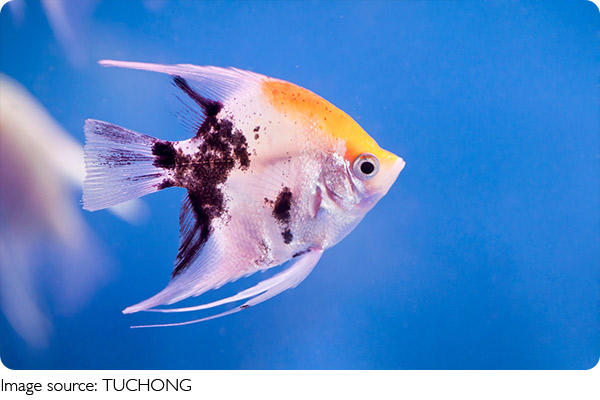
The world in which fish live is vastly different from the land environment inhabited by humans.
This fundamental difference extends beyond mere lifestyle and survival strategies, influencing how each perceives their surroundings.
So Lykkers, delves into the visual differences between fish and humans, focusing on the structural and functional distinctions between fish eyes and human eyes, and the resultant impact on fish life.
1. Structure and Function of Fish Eyes
Fish eyes and human eyes share a basic structural similarity: both perceive light and form visual images using the cornea, lens, retina, and other components.
However, the starkly different living environments have driven fish eyes to evolve uniquely in both form and function to meet the demands of the underwater world.
The Pacific Swallow: The Beautiful Messenger Flying Along the Pacific Coast.
Deer in general are males with antlers, but females are antlerless, but this is not absolute.
Butterflies: Marvels of life, majestic migrations, ecological guardians. A testament to nature's enchantment.
New study: Dragonflies' long-distance migration surprises, urging biodiversity protection.
Magpies' nesting skills and choices reveal their intelligence, offering insights into their captivating avian world.
Meet the Big Five: apex predators ruling African Savannah with imposing stature and unique survival tactics.
Lens Shape
The lens of a fish's eye is typically spherical, whereas the human eye lens is more oblate. This spherical lens allows fish to focus light more effectively, providing clear underwater images.
Given that water has a different refractive index compared to air, the spherical shape helps correct light refraction underwater, a crucial adaptation for fish to see clearly.
Corneal Function
In humans, the cornea plays a significant role in focusing light. However, in fish, the cornea's role is diminished due to the similar refractive index of water and the cornea itself. Therefore, fish primarily rely on their lens to adjust focus, a function that is much more critical in their vision than in human vision.
Retinal Structure
The retina's composition in fish differs significantly from that of humans, especially in the ratio of rods to cones. Many fish species inhabit low-light environments, necessitating a higher number of rod cells that excel at capturing light in dim conditions.
Additionally, some fish possess double cones capable of detecting ultraviolet light, an ability that is advantageous for finding food and avoiding predators in murky waters.
2. Adaptability of Fish Vision
Color Perception
Many fish species can perceive ultraviolet light, a spectrum invisible to human eyes. This capacity helps fish identify predators, prey, and other fish species in their habitat.
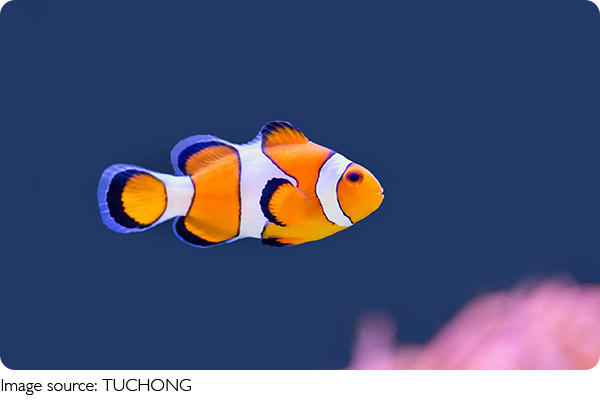
For instance, coral reef fish often exhibit vibrant body colors that stand out under ultraviolet light, aiding in communication and identification within their complex environments.
Field of View
Fish typically have eyes positioned on either side of their heads, granting them a broader field of view, often approaching 360 degrees. This panoramic vision allows fish to monitor their surroundings more effectively, spotting potential threats and opportunities for predation.
This adaptation contrasts sharply with humans' forward-facing binocular vision, which is optimized for depth perception and three-dimensional vision.
Light Adaptation
Some fish inhabit regions with extreme light variations, such as shallow waters that experience bright daylight and deeper waters that are dark at night.
Their eyes have evolved to adapt swiftly to these changes, adjusting the sensitivity of their retinal photoreceptor cells to maintain clear vision across varying lighting conditions. This ability is crucial for both hunting and evading predators.
3. Impact of Visual Differences on Behavior
The structural and functional differences between fish and human eyes profoundly influence the behavior and life strategies of fish.
Hunting and Foraging
Fish rely heavily on vision to identify and capture prey. Their ability to sense ultraviolet light and maintain a wide field of view gives them an edge in spotting food and predators underwater. These visual advantages enable fish to forage efficiently in their complex aquatic environments.
Social Behavior
Visual signals, including body color, play a pivotal role in the social interactions of many fish species. For example, coral reef fish use their vibrant colors for mate selection and group identification.
This reliance on visual communication stands in contrast to humans, who primarily depend on language and facial expressions to convey information and emotions.
The significant differences in the structure and function of fish and human eyes highlight the varying demands placed on visual systems by different environments.
Fish, living in an aquatic world, have developed a unique visual system that enables them to survive and thrive under the complex and changing light conditions of their underwater habitats.
Dear Lykkers, by studying these differences, we can gain a deeper understanding of fish behavior and ecology, offering insights that might inspire advancements in scientific research and technological innovation.